· Industry Insights · 8 min read
Trousers vs Jeans: What Every Bulk Clothing Buyer Needs to Know
They're both bottoms. They're both bestsellers. But trousers and jeans serve completely different markets — and confusing the two can cost you your next container order.
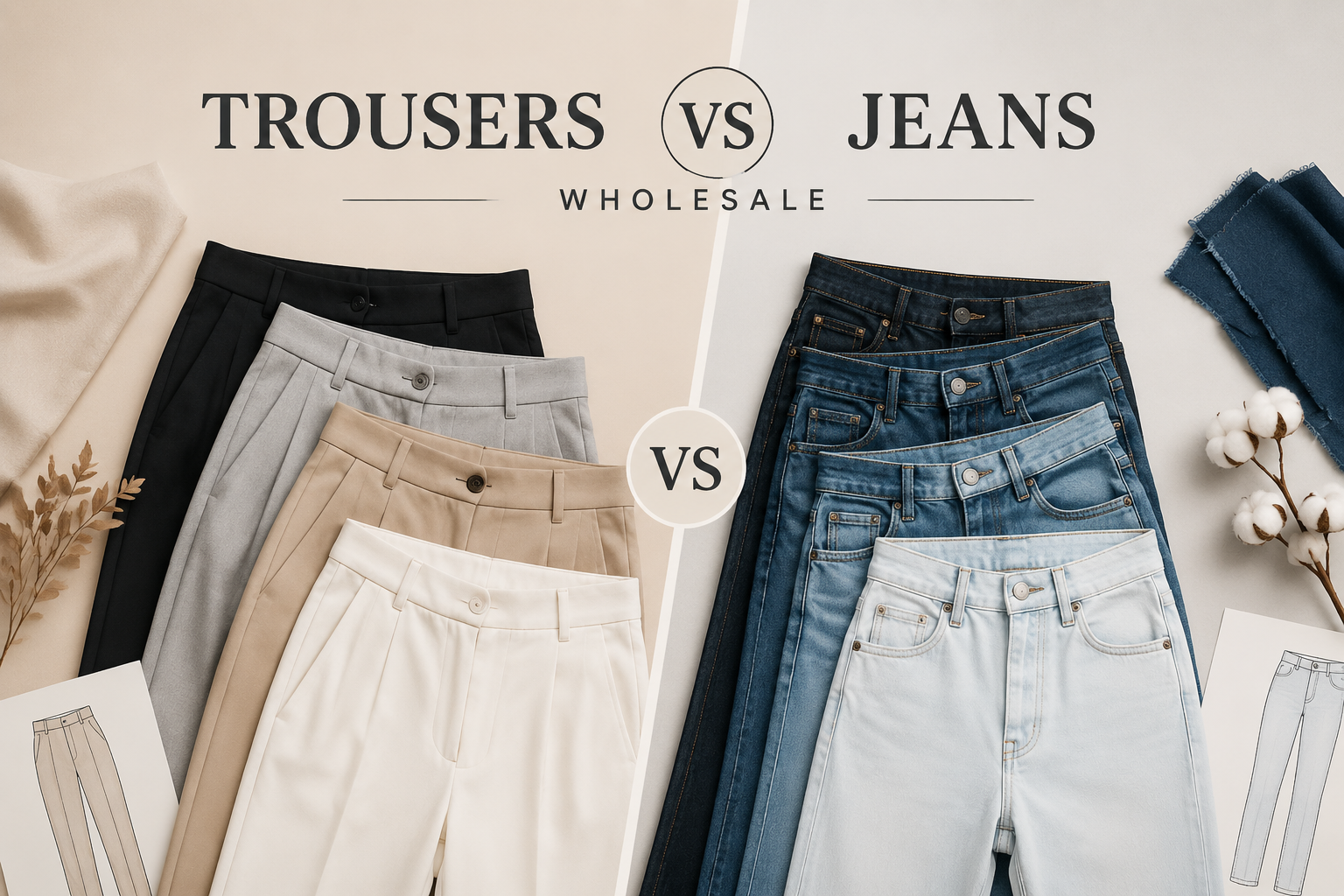
The Question That Sounds Simple — Until You’re Placing a Bulk Order
Walk into any wholesale trade show and ask a buyer the difference between trousers and jeans. Most will give you a confident answer in under ten seconds.
Ask them which one moves faster in their market, which one carries better margins at stocklot pricing, and which one creates more sizing headaches at customs — and the confidence starts to crack.
Trousers and jeans are not interchangeable categories. They occupy different shelves, different seasons, different customer mindsets, and different supply chain realities. For importers, discount retailers, and resellers sourcing bulk clothing from factory overstock, understanding these distinctions is not academic. It directly determines which lots are worth acquiring and which ones will sit in your warehouse eating margin.
What Separates Trousers From Jeans — At the Factory Level
The confusion between trousers and jeans usually starts at the surface: both are two-legged, waist-fastened bottoms. That’s where the similarity ends.
Trousers are a broad category defined by their construction approach rather than their fabric. The term covers chinos, dress pants, cargo trousers, linen pants, and tailored slacks. What unites them is a woven fabric structure (wool, cotton twill, linen, polyester blends), a clean-finished interior, and a silhouette built around drape rather than durability.
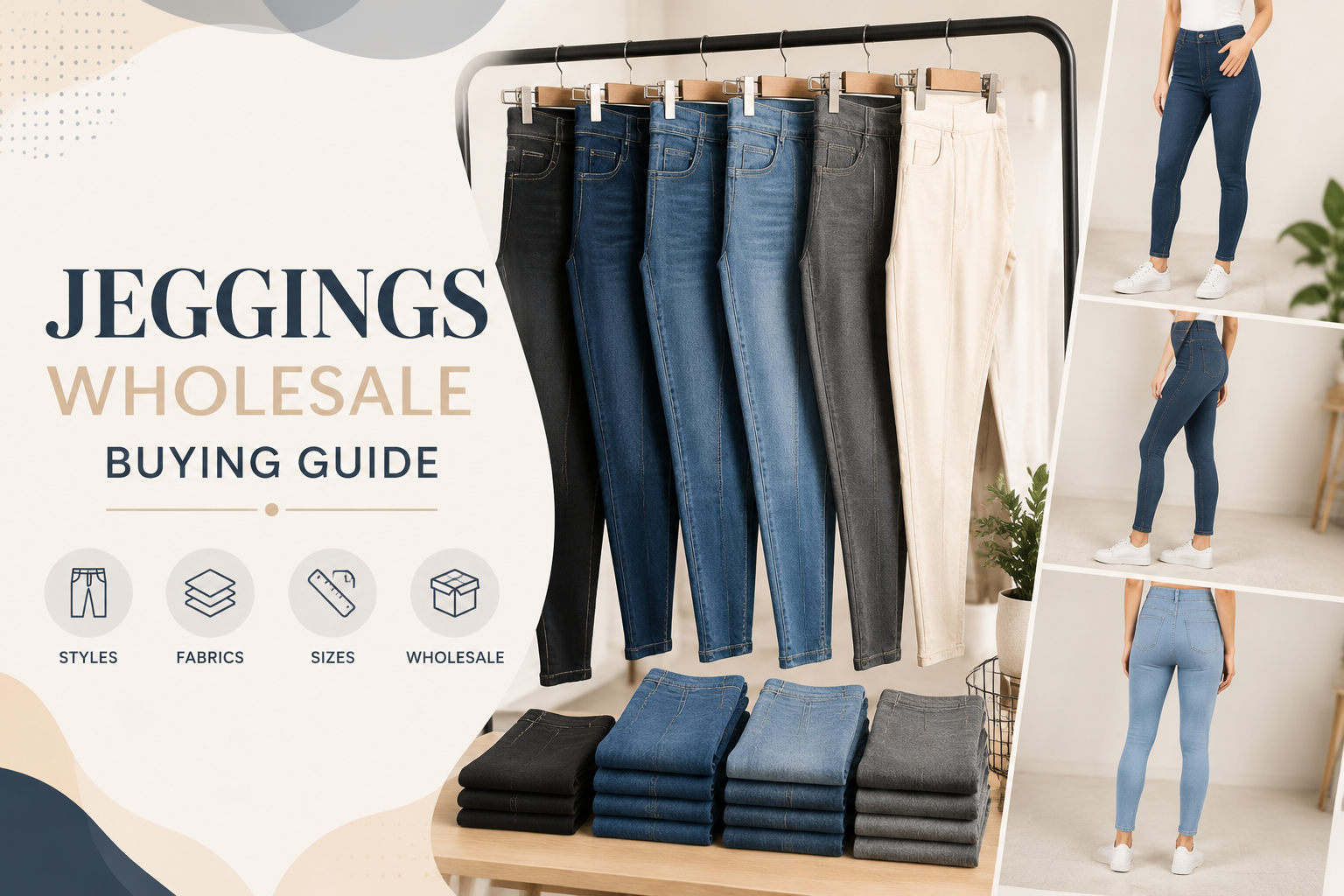
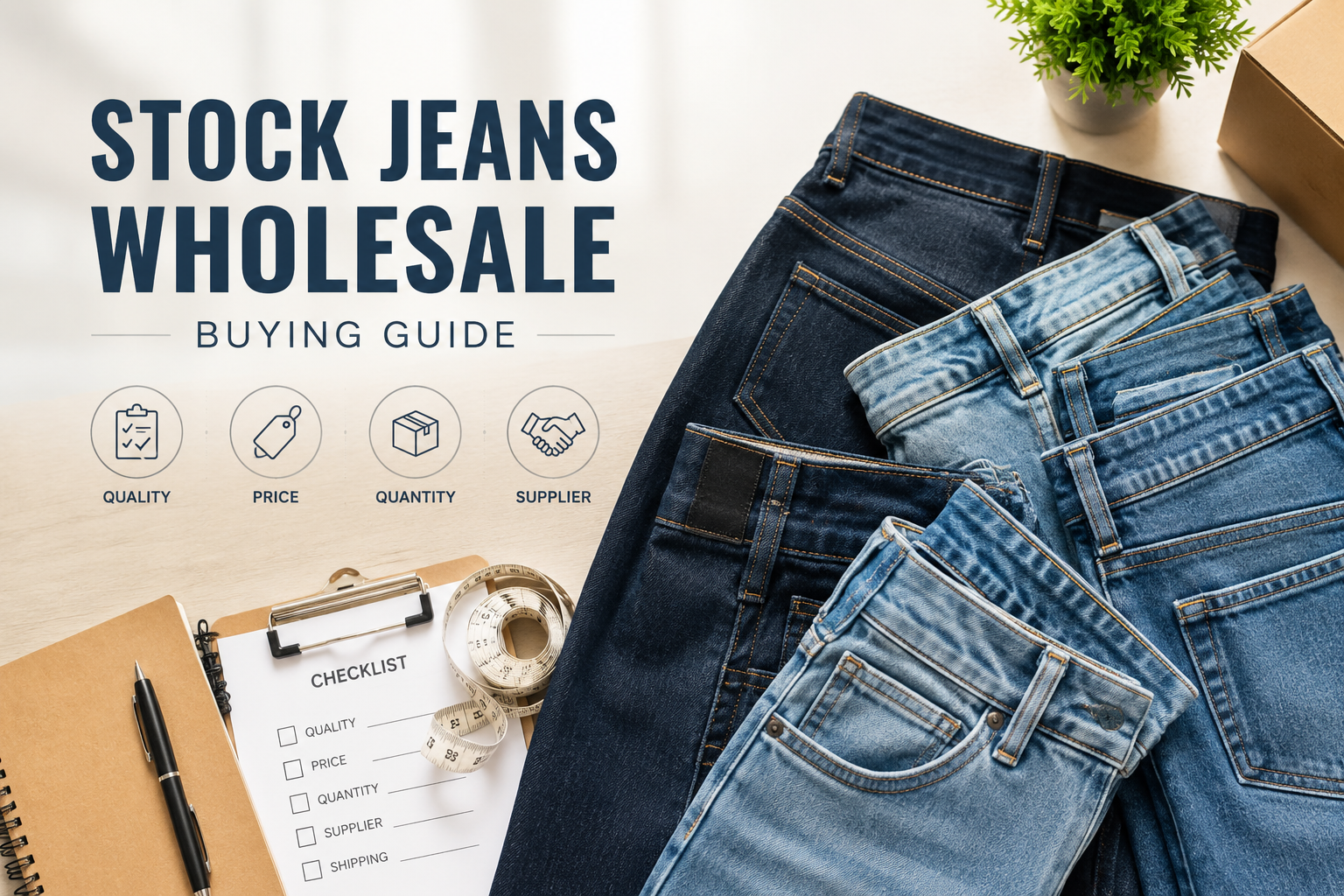
Jeans are a specific product within the broader trouser category, defined by a single fabric: denim — a cotton twill woven with an indigo-dyed warp and undyed weft, producing the characteristic blue face and white reverse. Beyond the fabric, jeans are distinguished by their construction details: bartack reinforcements, riveted stress points, flat-felled seams, and a five-pocket pattern that has remained essentially unchanged since Levi Strauss patented it in 1873.
At the factory level, these two products are manufactured in entirely different production environments, require different machinery, and follow different QC protocols. A trouser factory and a denim mill are not the same operation.
The Market Reality: Who Buys What, and Why
For bulk wholesale clothing buyers, the more important distinction is not construction — it’s consumption.
Trousers sell on occasion. A customer reaches for chinos when they need to look presentable without wearing a suit. They buy cargo trousers for utility. They choose linen pants for warm weather events. The purchase is driven by a specific dress code or functional requirement. This means trouser sales cluster around back-to-school periods, spring/summer transitions, and corporate clothing cycles. Slow in deep winter. Faster when occasion-dressing spikes.
Jeans sell on identity. A customer buys jeans because jeans are what they wear — not because a specific occasion demands it. Denim is the default bottom for an enormous portion of the global consumer market. It sells in January. It sells in July. It sells in recession years and boom years. The category has no meaningful off-season, and it crosses demographic groups in ways that no other bottom category approaches.
This market dynamic has direct implications for overstock wholesale clothing buyers:
- Trouser overstock tends to accumulate in seasonal waves — you’ll find large cancelled-order lots after spring buying windows close
- Denim overstock is more evenly distributed throughout the year but moves faster when acquired, because resale demand is constant
- Trouser lots often carry more style risk (a silhouette or colour that missed for the original buyer may miss for the next one too)
- Denim lots in core washes — mid-blue, dark indigo, black — carry almost no style risk
Fabric, Care, and the Logistics Nobody Warns You About
The differences between trousers and jeans don’t stop at the sales floor. They extend into shipping weight, customs classification, and end-consumer care requirements — all of which affect your landed cost and your return rate.
Weight per unit: Denim is a heavy fabric by design. A pair of standard 12oz denim jeans will weigh significantly more per unit than an equivalent pair of cotton chinos or linen trousers. At container scale, this weight differential compounds. A 2,000-unit denim lot and a 2,000-unit trouser lot will not fill the same container to the same CBM-to-unit ratio. Build this into your freight calculations before you buy.
HS code classification: Both trousers and jeans typically fall under HS Chapter 62 (woven apparel, not knitted), but the specific subheading varies by fabric composition. Denim jeans have their own commonly used subheadings that differ from cotton chinos or polyester blends. Misclassification is one of the most common — and most avoidable — customs errors in bulk apparel importing. Always verify with your freight forwarder before shipment.
Care requirements: Trousers in wool, linen, or structured blends often require dry cleaning or gentle machine washing. Denim is typically machine washable, which is part of its consumer appeal — but raw and selvedge denim comes with specific first-wash instructions that, if not communicated to the end customer, generate unnecessary returns. Know the care labels on any lot you acquire before it reaches your resellers.
Stocklot Trousers vs Stocklot Jeans: Where the Value Sits
In the overstock wholesale clothing market, both categories appear regularly — but they present different value propositions.
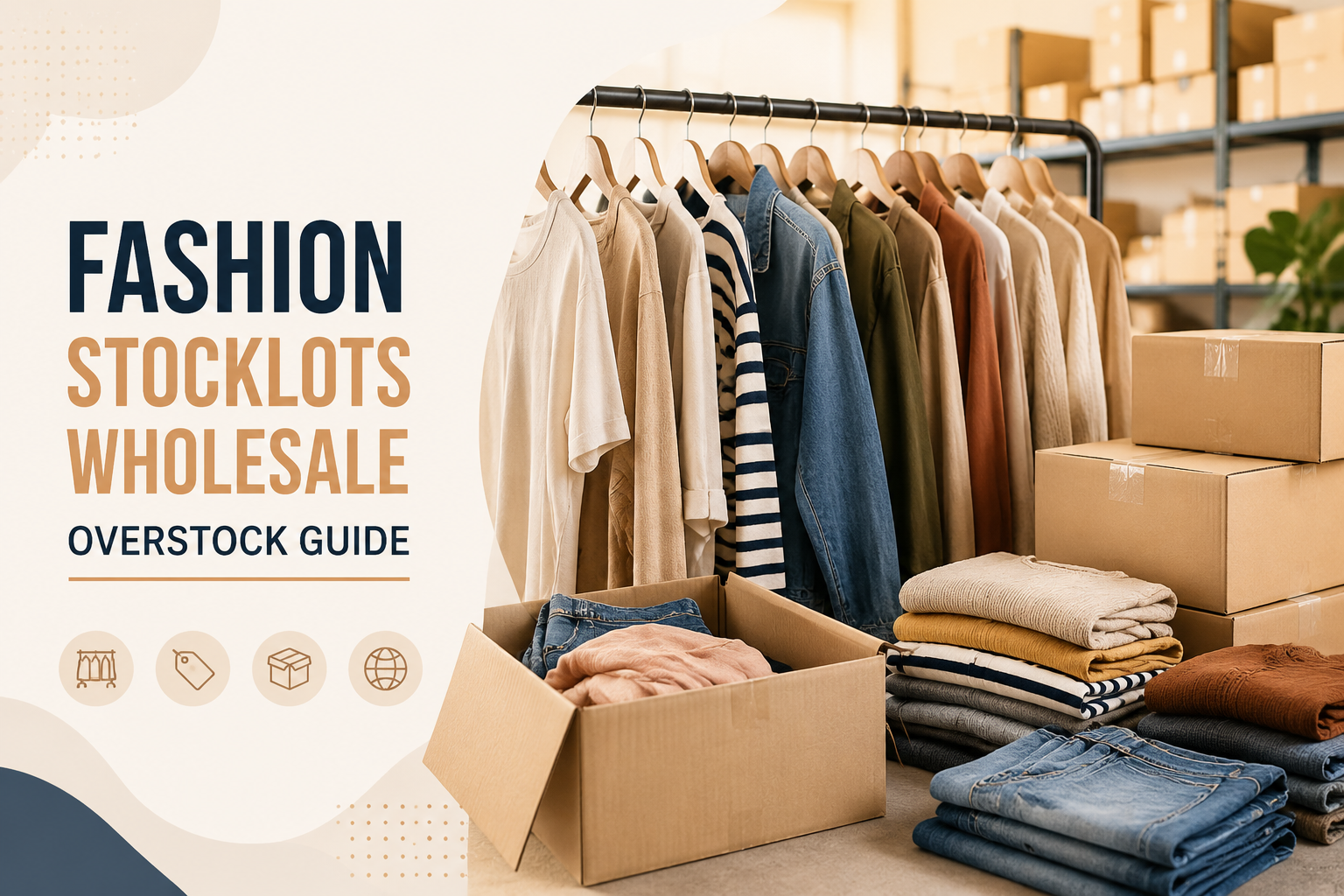
Stocklot trousers are often available in larger single-lot quantities because trouser overproduction tends to happen at scale: a retailer orders 80,000 units of a summer chino programme, the season underperforms, and 30,000 units never ship. These lots offer strong per-unit economics precisely because of their size, and the garments themselves are typically first-quality, original-tag product manufactured to a major retailer’s specification.
The risk with trouser stocklots is assortment. Cancelled programme lots often have uneven size ratios — surplus in the extremes (very small or very large) because those sizes move more slowly at retail. Inspect the size breakdown before committing.
Stocklot jeans are the category where experienced bulk buyers focus disproportionate attention — and for good reason. Core-wash denim in verified factory-fresh condition is genuinely difficult to source in quantity at stocklot prices. When a legitimate lot appears — 10,000 pairs of straight-leg mid-blue jeans from a factory overrun, defect-free, with original tags — it moves quickly. Buyers who have sourced from the same supplier before get first call.
The upside is correspondingly higher: denim stocklots in core washes sell through faster and more predictably than almost any other category in the bulk clothing market, and the margin between landed stocklot cost and resale value is consistently strong.
How to Evaluate Any Trouser or Jeans Lot Before You Buy
Whether you’re looking at casual pants wholesale or a bulk denim jeans lot, the evaluation framework is the same — but the specific checkpoints differ.
For trouser lots, verify:
- Fabric composition per unit (affects customs classification and care requirements)
- Waistband construction — structured waistbands with interfacing indicate a higher-quality production standard
- Size ratio across the lot — flag any lot where more than 30% of units sit in the two smallest or two largest sizes
- Seasonal relevance — linen and lightweight cotton trousers have a harder resale window in cold-climate markets
For denim jeans lots, verify:
- Denim weight in oz (10–13oz covers the mainstream market; lighter or heavier requires a specific buyer)
- Wash description — mid-blue and dark indigo are universally liquid; fashion washes (acid wash, distressed, overdyed) carry style risk
- Stretch content — pure cotton denim and cotton/elastane blends have different consumer markets; verify which you’re acquiring
- Rivet and hardware quality — cheap hardware tarnishes quickly and generates consumer complaints disproportionate to its unit cost
In both categories, insist on photographic documentation of the actual lot — not stock imagery — and request video inspection for any purchase above your threshold value.
The Practical Buying Decision
For buyers who are new to the stocklot market or expanding their category mix, the conventional wisdom is straightforward: start with denim.
Core-wash denim jeans are the category with the lowest style risk, the broadest addressable resale market, and the most consistent global demand. A stocklot of 5,000 pairs of straight-leg dark indigo jeans in a standard size range will find buyers in almost any market — discount retail, online resale, market stalls, export to secondary markets.
Trousers require more market-specific knowledge. The chino that moves in Northern Europe may not move in Southeast Asia. The cargo trouser that sells in rural markets may not sell in urban ones. Trouser buying rewards experience and local market knowledge; denim buying rewards execution speed.
Both categories appear regularly in factory overstock clearance. Both offer strong economics when sourced correctly. The difference is in the skill set they demand from the buyer.
EcoStocklots: Verified Factory Overstock in Both Categories
At EcoStocklots, we source directly from factory surplus across both trouser and denim categories — genuine cancelled-order and overproduction clearance, never manufactured-to-order inventory.
If you’re building your bottoms inventory, browse our current stocklot listings:
- Wholesale Denim Jeans → Factory-fresh overstock in core washes and fits, updated regularly
- Casual Pants Wholesale → Chinos, cargos, and tailored trouser lots from verified factory sources
Every lot ships with full export documentation, original factory tags intact, and transparent size and condition disclosure. No broker chains. No manufactured-to-order inventory dressed up as stocklot.
Real-time inspection available: We provide live video inspections via WhatsApp for any current inventory lot. Chat with our sourcing team.
EcoStocklots is a B2B wholesale platform specialising in factory overstock apparel clearance. We connect global importers, discount retailers, and online resellers with verified, defect-free surplus inventory at competitive bulk pricing.