· Buying Guides · 3 min read
Buying Slides in Bulk: A Practical Guide for Stocklot Resellers
Looking to buy bulk slides or bulk slip-ons for resale? Here's how to evaluate slipper-slide stocklots, spot good grading, and avoid common sourcing mistakes.
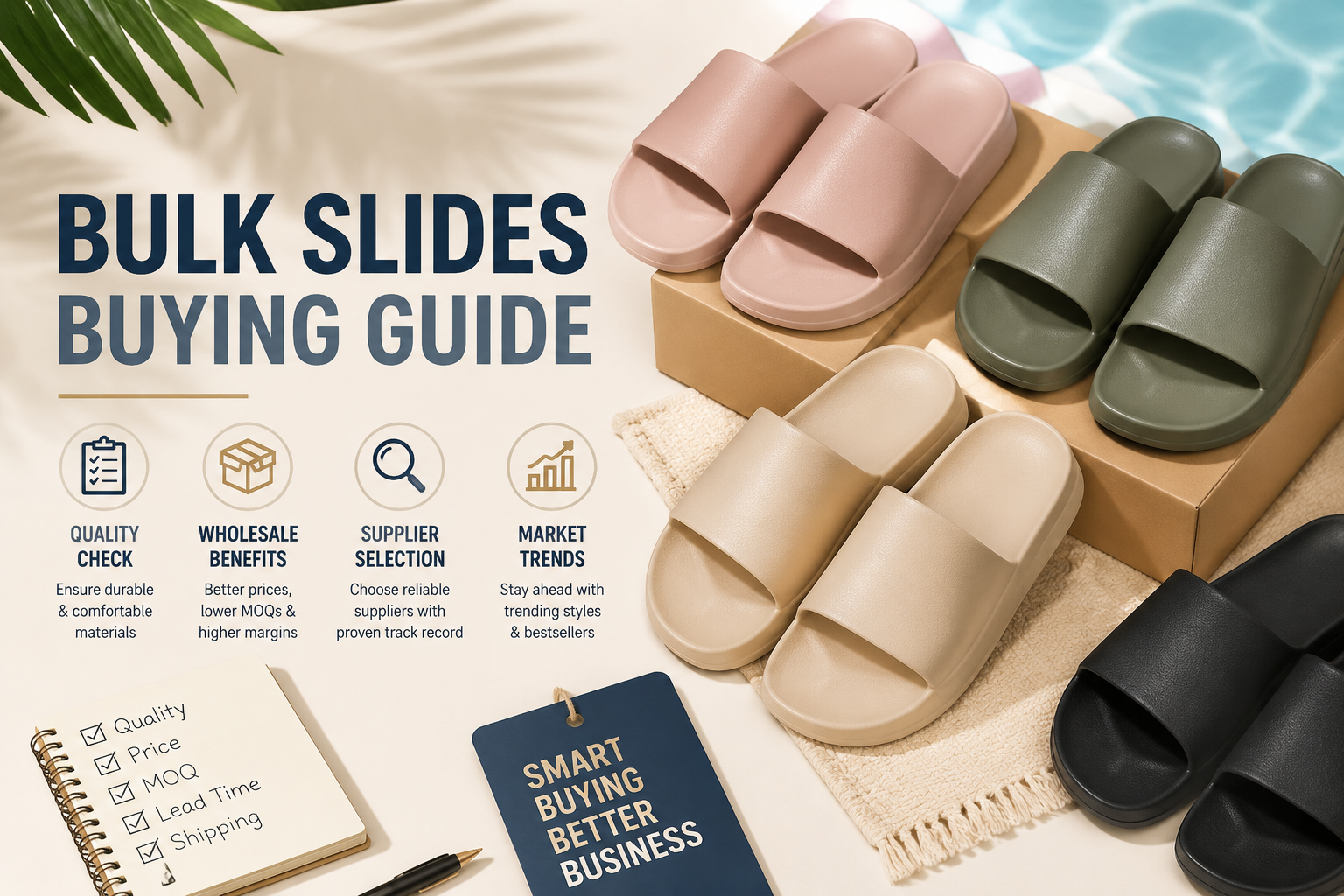
Why Slides and Slip-Ons Are a Smart Stocklot Category
Slides and slip-on footwear have become one of the steadiest-moving categories in the resale world. They’re low-complexity (no laces, fewer components), easy to photograph, easy to ship, and demand stays consistent across seasons — pool season, gym culture, athleisure, and everyday casual wear all keep slides moving. For buyers building a resale business around closeout and surplus inventory, sourcing slides bulk is one of the more forgiving categories to start with compared to fast-fashion apparel that turns over every few weeks.
If you’re new to stocklot sourcing, here’s what actually matters when evaluating a slides or slip-ons lot.
1. Understand What You’re Actually Buying
“Slides” and “slip-ons” often get lumped together in listings, but they’re not identical:
- Slides — open-toe, single-strap or molded footbed, typically EVA or rubber. Brands like sport-sandal and pool-shoe lines fall here.
- Slip-ons — broader category including loafers, espadrilles, slip-on sneakers, and casual mules. Materials vary more (canvas, knit, leather-look).
A lot advertised as bulk slip-ons may include a wider style mix than a pure bulk slides lot, which usually skews toward summer/pool/recovery footwear. Know which one fits your storefront before you commit.
2. Grading Matters More Than Brand Names
Unlike apparel, footwear condition is easier to misjudge from photos alone. When reviewing a slides bulk lot, check whether the supplier specifies:
- A-grade / shelf-pull — overstock, never worn, original packaging may be missing
- B-grade — minor box damage, mismatched packaging, possible color variation
- Mixed-condition — combination of returns, overstock, and store samples
Pricing should reflect grading honestly. A lot priced like A-grade but shipped as mixed-condition is the most common complaint we hear from first-time bulk buyers.
3. Size Curve Is the Silent Deal-Breaker
Footwear lots live or die on size distribution. A pallet of 500 bulk slip-ons sounds great until you discover 60% are size 6 and 7 — sizes that don’t move as fast in most resale markets. Before buying:
- Ask for a size breakdown sheet, not just total unit count
- Compare the curve against your actual customer base
- Be wary of “assorted sizes” with no documentation — this is often a sign of cherry-picked inventory where popular sizes were already pulled
4. Seasonality and Storage Costs
Slides are seasonal in colder climates but evergreen in warm-weather markets, online resale, and export. If you’re buying bulk slides to flip domestically, time your purchase 60–90 days ahead of peak season. If you’re reselling cross-border or online where seasonality flattens out, this constraint matters less — but factor in storage costs either way if you’re not moving inventory immediately.
5. Calculate True Landed Cost
A common rookie mistake: comparing per-unit price across listings without normalizing for:
- Freight class (footwear is bulky relative to weight)
- Palletization vs. loose-carton shipping
- Import duties if sourcing cross-border
- Estimated shrinkage from damaged/unsellable pairs (typically 3–8% even in well-graded lots)
A slightly higher per-unit price with tighter grading and accurate size curves often beats a cheaper, vaguely-described lot once these costs are factored in.
Where to Source Slides and Slip-On Stocklots
If you’re ready to start sourcing, browse graded, documented inventory in our Slippers & Slides category — every lot lists condition grading, approximate size curves, and unit counts upfront so you can calculate landed cost before you buy, not after.
Whether you’re filling out a multi-category pallet or sourcing a dedicated bulk slides or bulk slip-ons run, start with clear documentation. It’s the single biggest factor separating a profitable resale lot from a warehouse of unsellable mismatched pairs.
Secure Your Supply Chain
We pride ourselves on transparency. Contact us for a detailed inspection report on any available stock.